On Sunday, we simply took it easy. After breakfast at Hotel Sagarnaga, we went for a walk in Parque Urbano Central.


We came across some Bolivia Boy Scouts while walking, as well as a small building they used (a couple of photos below).

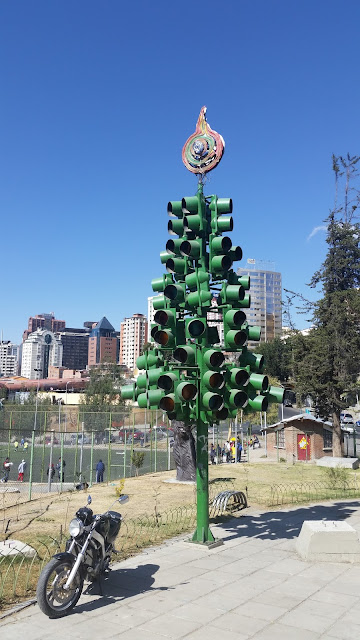
They also had interesting sculptures and artworks throughout the park.

When then went to the pizza restaurant by the hotel for a lunch of some great margaritas and a Hawaiian pizza. One of the signs there and in many of the restaurants was "All people are equal before the law" - I believe this is part of their socialist politics.

After lunch, we packed and took it easy, had a nice dinner down the street and an early evening to rest up for our long travel home. Monday, we left the hotel by taxi around 11:00 and went to the airport. LATAM again made us check our carry-on size suitcases even though we again later saw most passengers with suitcases as large or larger than ours (I later determined that mine had been opened but did not notice anything missing). We then waited a couple of hours before the hour flight to Santa Cruz and the three hour flight onward to Lima. We had a screaming baby behind us for the whole trip, and who repeatedly kicked and hit my seat 4C (because mom could not control him). By contrast, a dad in seat 4A had the nicest, most genial one year old child who not only did not bother Patty in 4B or me in 4C - in fact, when dad needed to fill out the immigration and customs paperwork, I held and played with the young girl for five or six minutes - she was most delightful. Row four was the first row behind what appeared could have been used as Business Class - it had both ample legroom and ample width for both of us to be comfortable.
We had an hour time difference and arrived in Lima a little after 6:00 p.m. (7:00 p.m. La Paz time) and hung out in the Sumac Club, one of the lounges for Star Gold and/or Business Class passengers. We had wine and food during the five plus hours there before boarding our United flight around midnight; we had lie flat business class seats in the middle row where they are configured 2 - 1 - 2, which would allow either of us to get up without disturbing anyone since we had an aisle on both sides of our seats. I was asleep before dinner was served and slept for about five hours; Patty had dinner and slept for several hours. We arrive in Houston a bit after 7:00 a.m. and had a quick pass through immigration, customs, rechecking our bags and TSA, and then to the United Club for a couple of hours. Out flight to Portland delayed about an hour, so we left a little after 10:00 Houston time and arrived in Portland four and half hours later just before 1:00. We were both tired, so we took a taxi back home (rather than the Trimet Train and a bus). We quickly laundered all of our clothes - even those that had been laundered at the hotel as they had dust and a the smell of Bolivia. Then we repacked for our trip to Ketchikan the next morning, had a nice cookout with Ben and Martha and off to bed to rest up for our trip to AK that would depart less than 18 hours after returning home.


We came across some Bolivia Boy Scouts while walking, as well as a small building they used (a couple of photos below).

They also had interesting sculptures and artworks throughout the park.


When then went to the pizza restaurant by the hotel for a lunch of some great margaritas and a Hawaiian pizza. One of the signs there and in many of the restaurants was "All people are equal before the law" - I believe this is part of their socialist politics.

After lunch, we packed and took it easy, had a nice dinner down the street and an early evening to rest up for our long travel home. Monday, we left the hotel by taxi around 11:00 and went to the airport. LATAM again made us check our carry-on size suitcases even though we again later saw most passengers with suitcases as large or larger than ours (I later determined that mine had been opened but did not notice anything missing). We then waited a couple of hours before the hour flight to Santa Cruz and the three hour flight onward to Lima. We had a screaming baby behind us for the whole trip, and who repeatedly kicked and hit my seat 4C (because mom could not control him). By contrast, a dad in seat 4A had the nicest, most genial one year old child who not only did not bother Patty in 4B or me in 4C - in fact, when dad needed to fill out the immigration and customs paperwork, I held and played with the young girl for five or six minutes - she was most delightful. Row four was the first row behind what appeared could have been used as Business Class - it had both ample legroom and ample width for both of us to be comfortable.
We had an hour time difference and arrived in Lima a little after 6:00 p.m. (7:00 p.m. La Paz time) and hung out in the Sumac Club, one of the lounges for Star Gold and/or Business Class passengers. We had wine and food during the five plus hours there before boarding our United flight around midnight; we had lie flat business class seats in the middle row where they are configured 2 - 1 - 2, which would allow either of us to get up without disturbing anyone since we had an aisle on both sides of our seats. I was asleep before dinner was served and slept for about five hours; Patty had dinner and slept for several hours. We arrive in Houston a bit after 7:00 a.m. and had a quick pass through immigration, customs, rechecking our bags and TSA, and then to the United Club for a couple of hours. Out flight to Portland delayed about an hour, so we left a little after 10:00 Houston time and arrived in Portland four and half hours later just before 1:00. We were both tired, so we took a taxi back home (rather than the Trimet Train and a bus). We quickly laundered all of our clothes - even those that had been laundered at the hotel as they had dust and a the smell of Bolivia. Then we repacked for our trip to Ketchikan the next morning, had a nice cookout with Ben and Martha and off to bed to rest up for our trip to AK that would depart less than 18 hours after returning home.