Friday, July 15, 2016

Portland Area Parks: Oaks Bottom Wildlife Refuge July 4, 2016

On Independence Day, Patty and I drove to Sellwood Park, parked our car there and then hiked down into Oaks Bottom Wildlife Refuge.


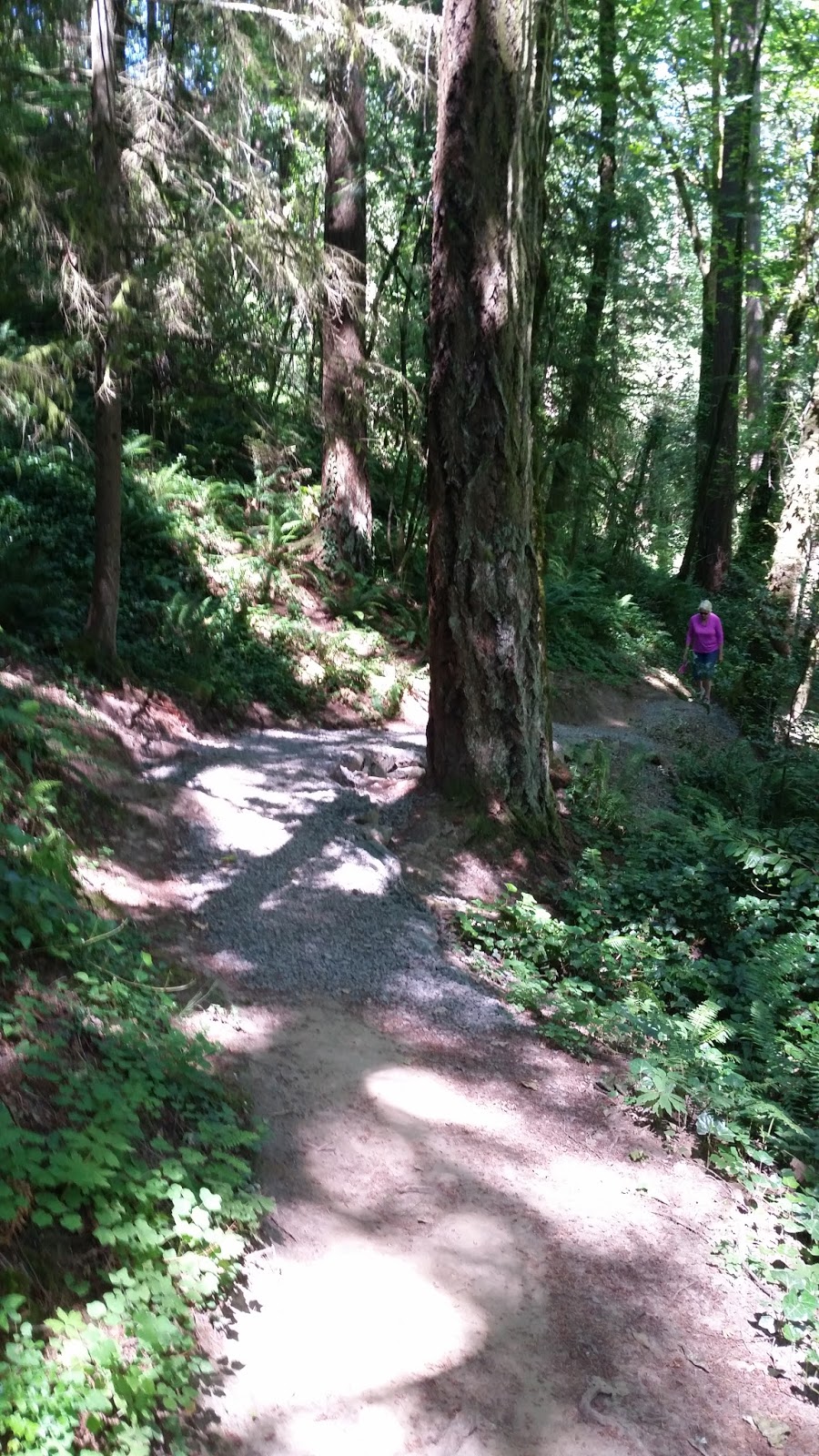
The trail starts in the park by dropping about 100 feet in elevation down an easy to walk sloped trail.  At the bottom, we turned right and headed north.  The Bluff Trail runs along the foot of a bluff to the east and wetlands to the west.


At the top of the bluff, we passed numerous homes, open land and a crematorium - and the crematorium is decorated with artwork showing the life in the refuge.


We then hiked west to the bike path and headed south along the Willamette River, where we saw colorful snap dragon blossoms and activity on the river.


We returned to and walked through Sellwood Park, seeing that there were playing fields, picnic areas and a swimming pool.  We went past the park to the nearby Columbia Sportswear Outlet Store where I was able to find some new shorts that I liked.  We stopped for coffee and a pastry before walking back to the park to get our car and head home.  On the way, we say a sign that reminded us of our cat Snow and emailed a photo of it to Megan.  We also saw some flowers we enjoyed.


And then it was home for a quiet evening.

Thursday, July 14, 2016

Portland Area Parks: Blue Lake Regional Park July 3, 2016

On Sunday, while Patty had a flying lesson at Troutdale Airport, I explored Blue Lake Regional Park.  The lake is long and relatively narrow, and runs east and west, roughly parallel to the Columbia River.  On the 100 acres of the north side is a pleasant park with gardens, covered picnic areas, sports fields, a nice beach, paddleboat rentals and more.  Across the lake, there are private homes.  Most of the people where in the middle of the park, with no one at either end of the beautiful park.


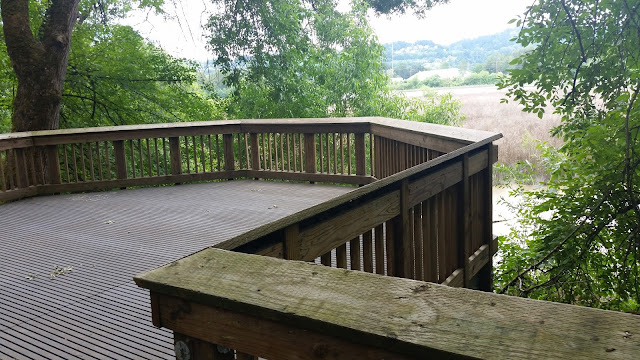
At one end of the park, there is a wildlife viewing area.  It was deserted except for the birds and me.


There were also some monuments to the Nicháqwli Indians who helped the Lewis and Clark expedition in the early 1800s.


A very nice park that is worth a return visit.

Wednesday, July 13, 2016

Portland Area Parks: Marquam Nature Park July 2, 2016

We had seen a write up of the park in the local paper.  It is a forested oasis in the middle of an urban center.  We went on a nice loop hike for about 90 minutes, then drove through the OHSU (Oregon Health Science University) campus which is located high on a hill in Portland.  If Ben ends up doing his fellowship there next year, he will commute by cable car.  One of the ways up and over part of Marquam is the cable car.  He has already used this route when he did a rotation there. 

The Marquam trail we followed was an easy climb up, across and then back down a couple of valleys cut by streams.


At one point, Patty found a small unicorn at the side of the trail.


This is where we made the turn to start going across a ravine and then down back to where we had parked.


We will return to Marquam Nature Park as there are many other interesting trails to hike and it is close to where we live in Portland.

Tuesday, July 12, 2016

Portland area parks: Cascade Locks and Bonneville Dam, July 1, 2016

On Friday July 1, Patty and I went to explore Cascade Locks.  I had seen it on the map and that there was a marine park there, so my curiosity was aroused.  Because this is in the Columbia Gorge, with high hills and cliffs on both sides of the river, there is an unexpectedly strong wind.  As I got out of the car, my hat was blown off and I had to chase it down.  From the parking lot of the Cascade Locks Marine Park, looking west (down river) there is the Bridge of the Gods.  It gets that name from native lore about a land crossing used by the Gods in centuries past.  Today, it is still a toll bridge and is the only crossing between here and some 40 miles downriver to Interstate 205 crossing from Portland OR to Vancouver WA.


When Lewis and Clark came through in 1803 - 1806, they had to portage around the rapids (Cascades) some 5 - 6 miles on land.  Eventually, a road was built, then a railroad and finally in the late 1800s, a series of locks.  When the Bonneville dam was built down river, the sixty mile lake behind the dam submerged the rapids and most of the locks.  What is left above water now is only part of the upper most lock and the top of Thunder Island.  People today still fish from the locks by climbing down ladders to platforms and use nets to scoop fish out of the river.  You can see a couple of the ladders and ramps just beyond the bridge on the Thunder Island side of the lock.


It is an easy but windy walk out to Thunder Island, but the views across the river and down river are excellent.


 The Oregon Pony, the first train to run when they finally built the railroad, is on display outside the Cascade Locks Museum - unfortunately, the museum was not open.


By the restaurant, there were sculptures and memorials to remind us of the people who had passed through in prior centuries.


There is now a paddlewheel boat that cruises on the river on the lake behind Bonneville Dam.


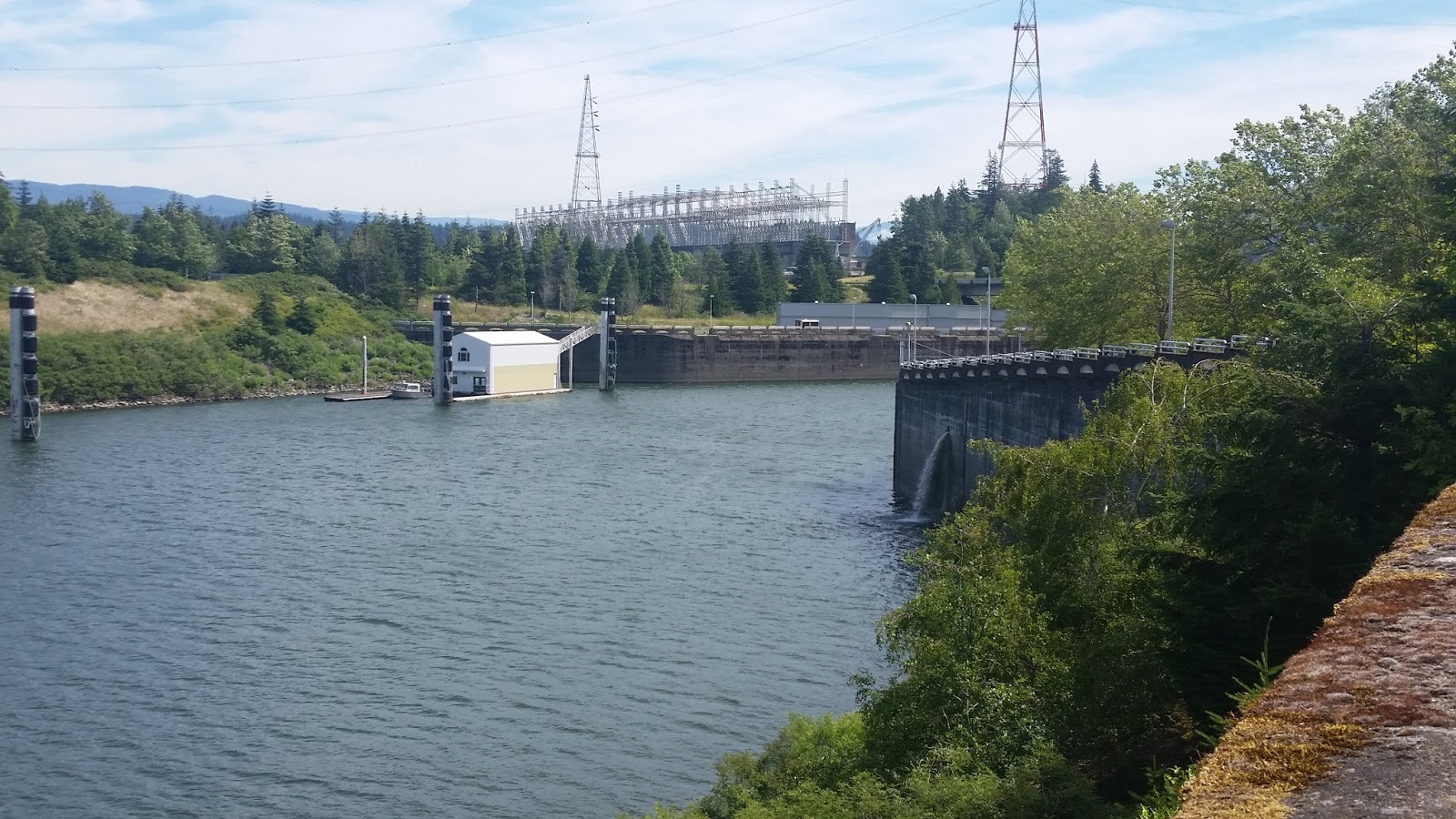
We had not learned about Bonneville Dam, but decided to stop as we still had some time left before needing to get back to Troutdale for Patty's flying lessons.  We had no idea how big it was, nor that there were multiple islands that were included in the facility that includes locks, generators, fish hatchery and multiple recreational area.  It is a federal facility and since Sept. 11, 2001, it has great security.  We could see some of the facility from the first island, but then had to go through a security gate just like at a military base.


After going through security, we drove across a couple of bridges and over the locks to get to the Bradford Island visitor center.  Two things we saw outside were a concrete guard shack built during WWII when they feared invasion from the Japanese and one of the huge propellers that the water turned to generate electricity.


The visitor center is five stories and from the rooftop, you can look up and see osprey nests on some of the electrical towers.  You can learn about how the electricity is generated.  And you can actually see the fish swimming upstream.


Lampreys had attached themselves to the viewing windows - the lampreys are about two feet long


I determined that we would need to come back when we had more time to visit.